
-
GermAwayUV 1 to 200 GPM UV Water Purifier
Regular price From $119.99 USDRegular priceUnit price per -
Submersible UV Germicidal Tank Sanitizers
Regular price From $99.99 USDRegular priceUnit price per -
High Output Submersible UV Germicidal Tank Sanitizers
Regular price From $299.99 USDRegular priceUnit price per -
Viqua VH410 & VH410M Cobalt Series UV Water Sanitizer
Regular price From $798.75 USDRegular priceUnit price per -
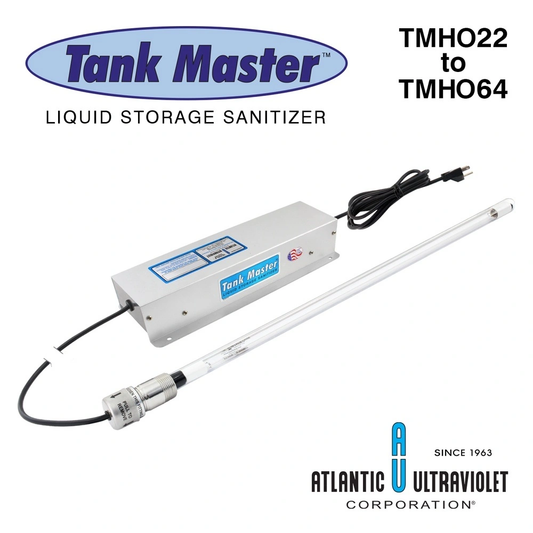
Tank Master UV Tank Storage Sanitizers
Regular price From $419.99 USDRegular priceUnit price per -
Authentic Solenoid Valve Kit for Viqua Solenoid Valve Kit - 1" for UVMax G, H, J, and Plus Series, PRO 10, 20, 30 Series
Regular price $643.00 USDRegular priceUnit price per -
VIQUA UV Controller for SQ-PA Series Systems (BA-ICE-S)
Regular price $299.00 USDRegular priceUnit price per -
Omnipure Q-Series 2.5" x 12" T33 Acid Washed GAC Filter - Q5633
Regular price $19.99 USDRegular priceUnit price per -
Viqua VT1 & VT4 Ultraviolet Water Purifiers
Regular price $315.00 USDRegular priceUnit price per -
Omnipure Q-Series 2.5" x 12" 5 Mic Sediment Filter - Q5605
Regular price $17.99 USDRegular priceUnit price per -
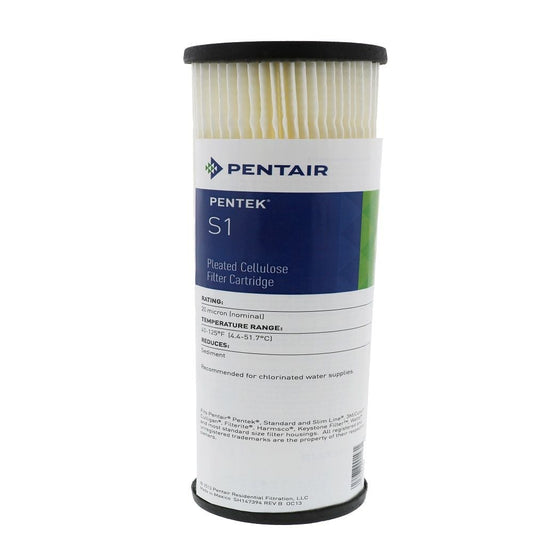
Pentek - S1 - 9-3/4" X 2.5" Pleated Cellulose Sediment 20 Micron Filter
Regular price $8.99 USDRegular priceUnit price per -
Atlantic Ultraviolet Maintenance Kit for MINIPURE® MIN-9
Regular price $127.90 USDRegular priceUnit price per -
Pentek - PD - Series -9-3/4" X 2.5" 10-mic Polydepth Sediment Filter
Regular price $10.99 USDRegular priceUnit price per -
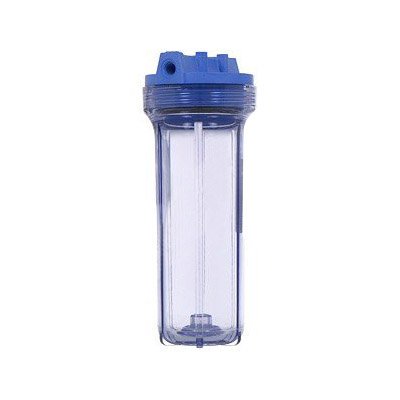
10" Pentek® Slimline Filter Housing
Regular price From $18.99 USDRegular priceUnit price per -
3GPM Bio-Logic Water Purifier
Regular price From $397.00 USDRegular priceUnit price per -
Aqua Flo Gen 5 Residential Premium UV Water Santizer System
Regular price From $899.36 USDRegular priceUnit price per -
Omnipure PuROTwist Q-Series TFC Membrane 36 GPD - TQ56-36FC
Regular price $76.99 USDRegular priceUnit price per -
Viqua VP600 & VP600M Commercial UV Water Sanitizer
Regular price $1,230.00 USDRegular priceUnit price per -
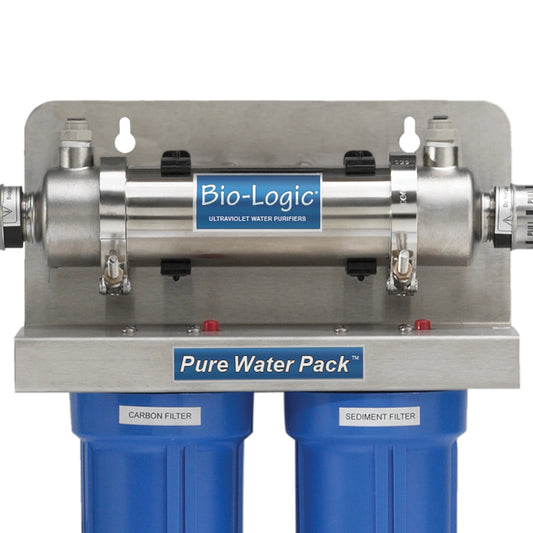
Water Purifier - Bio-Logic Pure Water Pack (5 micron filters)
Regular price From $549.99 USDRegular priceUnit price per -
Pentek Mounting Bracket Kit
Regular price $8.99 USDRegular priceUnit price per















What is a UV water filtration system?
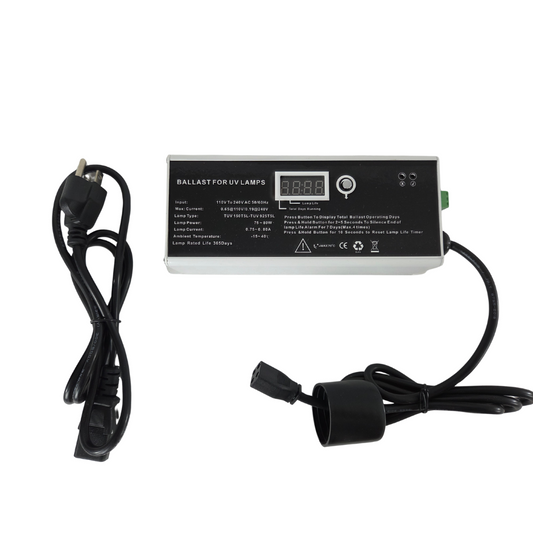
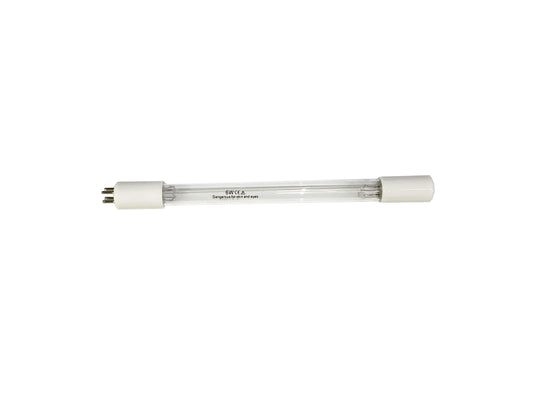
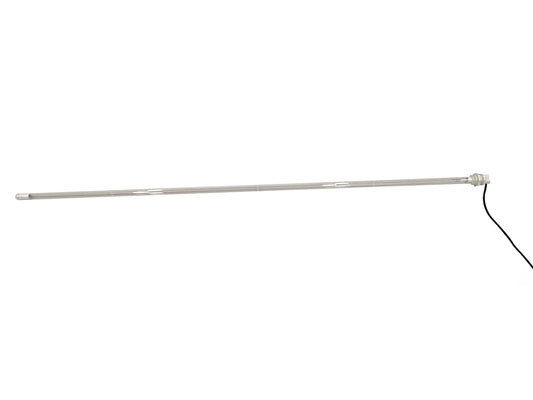
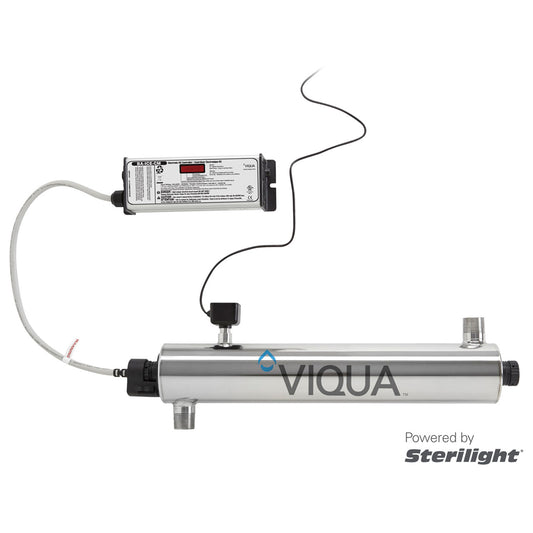
A UV water filtration system is a point-of-entry or point-of-use device that passes water beside a high-output ultraviolet (UV-C) lamp. The UV light scrambles the DNA of bacteria, viruses, and protozoa so they can't reproduce or infect. It disinfects your water without adding chemicals, altering its taste, or leaving any byproducts behind.
Because UV on its own doesn't remove sediment or dissolved solids, most systems pair the UV chamber with a pre-filter for complete water treatment.
How to choose the right UV water filtration system
The right UV water filtration system depends on your flow rate and application:
- Flow rate (GPM): Match the system's rated gallons per minute to your peak demand. Our range runs from ~1 GPM point-of-use units to 200+ GPM commercial systems.
- Whole-house vs. point-of-use: Point-of-entry systems treat every drop entering a building; point-of-use units treat a single tap or appliance.
- Water quality: Cloudy or high-sediment water needs pre-filtration first, so the UV light can reach every microorganism.
- Certification: For drinking-water applications, look for NSF-validated systems (e.g. NSF Class A).